
Play
The traditional Indian games that quietly teach maths
Pallankuzhi is counting practice. Gilli-danda is measurement. Hopscotch is number recognition on two feet. None of them feel like studying, and that is the point.
Trickly 4 min read
There is a strange assumption in modern schooling that learning happens at a desk and everything else is a break from it. Indian children have been learning maths in courtyards for a very long time, and nobody ever called it a lesson.
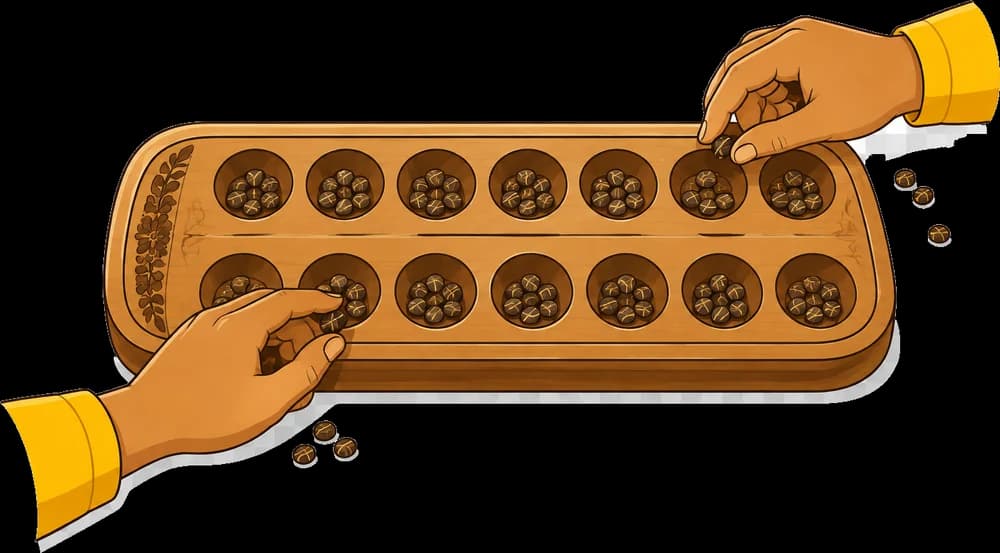
Pallankuzhi is arithmetic in disguise
Two rows of seven pits, five counters in each, and a rule that makes you count as you go. A child playing pallankuzhi is adding, subtracting and predicting several moves ahead — hundreds of times in a single game.
Nobody has to be told to concentrate. The game will not work if you stop counting.
Gilli-danda is measurement
You score by measuring how far the gilli flew, in lengths of the danda. That is estimation and repeated addition, done outdoors, with an argument at the end about whether it was really eleven lengths or ten. The argument is part of the learning.
Hopscotch is number recognition on two feet
A four-year-old who cannot yet read numbers on a page will happily hop on them for an hour. Learning something while moving fixes it far more firmly than reading it — and the balance work is genuinely good for them.
Kho-Kho and Kabaddi teach the other thing
Not arithmetic — judgement. In Kho-Kho you must decide when to pass the chase on. In Kabaddi you must decide how deep to raid before your breath runs out. Both are risk calculations made under pressure, over and over.
A child who has learned to judge when to turn back in a kabaddi raid will not waste twenty minutes on a four-mark question.
Why we interrupt your child's studying
After thirty minutes, Trickly stops and suggests a game. This is deliberate. Memory consolidates during breaks, movement improves attention for the session afterwards, and a child who has been outside comes back to the desk in a different mood entirely.
We are probably the only learning app actively trying to reduce its own screen time. We think that is the right way round.
Try it on tonight's homework
Photograph the question. Get the answer, the steps and the words to teach it — in your language.
Ask Trickly